
Take it Back Upstream (the Compost abides)
Invasive seastars, sprouting broccoli, + active repair, in a bucket.

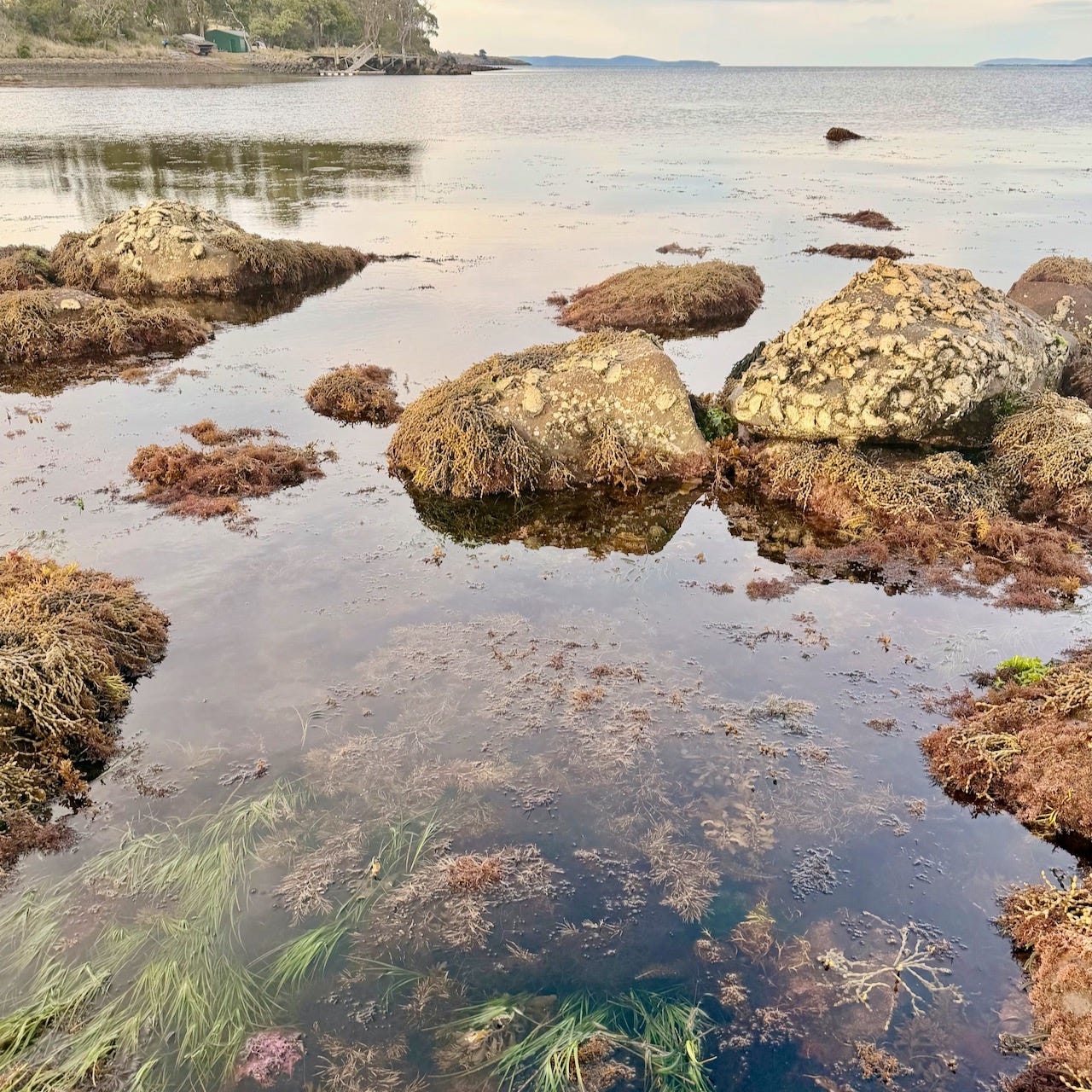
Plunk. Another Seastar flops into the bucket. Plunk. It’s easier to find them here, on the far reaches of the rock shelf, revealed by this lowest of low tides. Five arms each, bumpy orange with purple edges.
Some as big as my hand, but mostly tiny baby ones, hiding in the crevices. They give way easily - not hard to pick off the rocks, bare hands are fine - and plunk, into the bucket.
Wow - once you get your Northern Pacific Seastar eyes on, they truly are everywhere.
The Norther Pacific Seastar is an aggressive ecosystem chomper, in this part of the world. They stowed away to lutruwita Tasmania in ballast water of ships during the 1980s, and tend to out-compete the local marine life - making them a major problem. They will eat anything they come across, and can deal with a greater range of habitat depth than other species.
They are also revelling in the increasing climate-warmed waters of this land, unlike the local marine life. These seastars are sticky little red flags of deep imbalance, but with five arms and a cheeky purple hue.
To ID the North Pacific Seastar is pretty simple, but very important - you don’t want to get them mixed up with the local species: Five long arms coming off a compact body, mostly yellow/orange, with purple tinges, especially when they are young. And most importantly - the arm tips - they are pointy, and turn up, just slightly. Quite different to the blunter tips of local species (who should be left well alone).
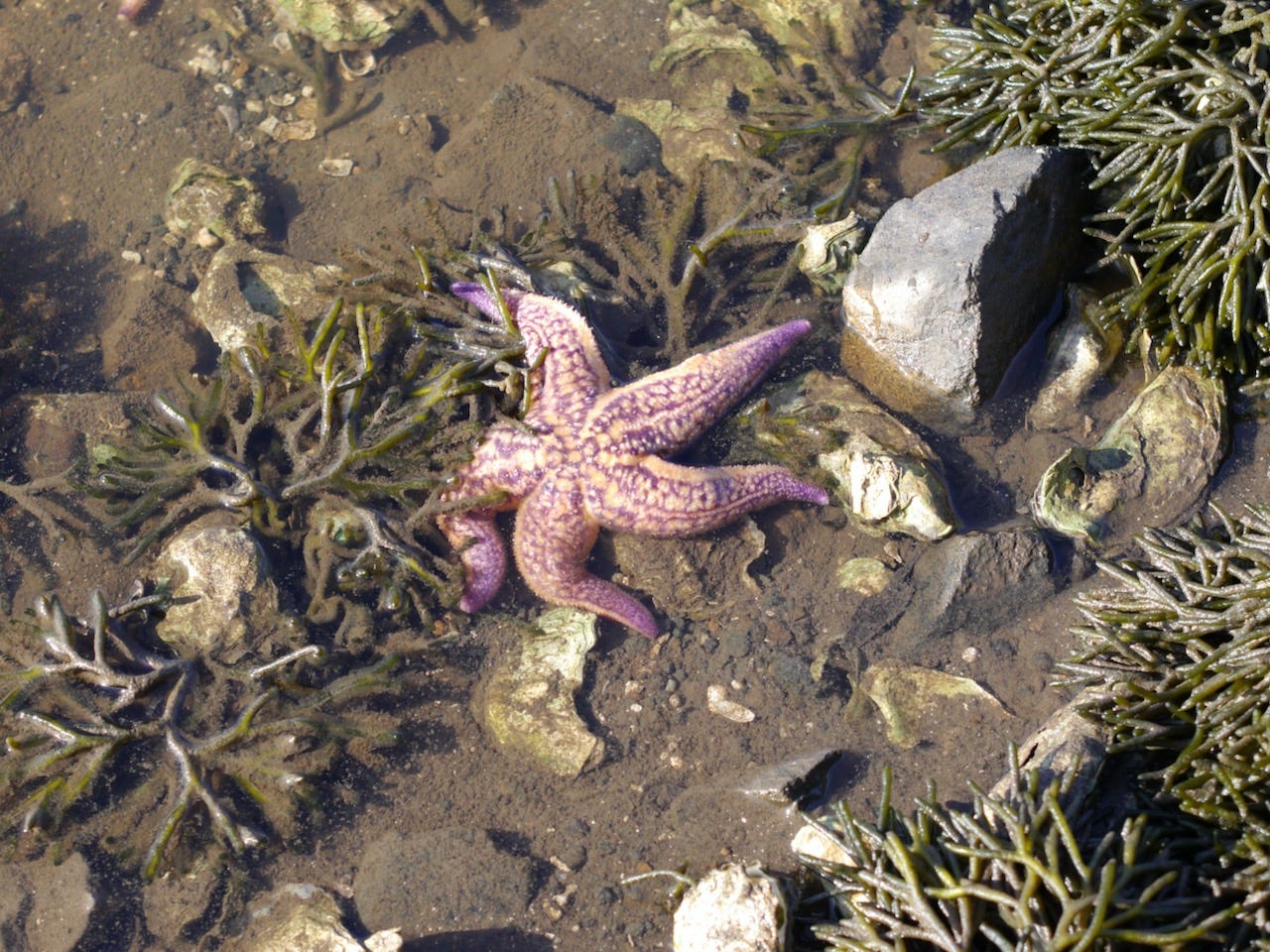
It’s considered good community practice to remove any Pacific Seastars that you find in these waters, as soon as you find them. For a while there it was unclear if folks were ‘allowed’ to remove these invasive seastars from the ecosystem, which seemed strange
Not allowed to be collected on boats, the regulations said. Which makes sense, so the seastars can’t accidentally be distributed further up and down the coast… but no further advice on collecting them was given.
I heard a story from down south that Fisheries did permit the gathering of Pacific Seastars if their intended use was specifically to be dried out for Christmas decorations. Hand on heart, I know folks who have used that line when questioned.
Fragrant boho seaside decorations aside, I see folks doing whatever they can to remove these unwelcome guests. There’s community groups up in nipaluna /Derwent that collect great hauls of the invasive seastars (legends) - and folks that go hopping across the rock shelves with a bucket, like me.
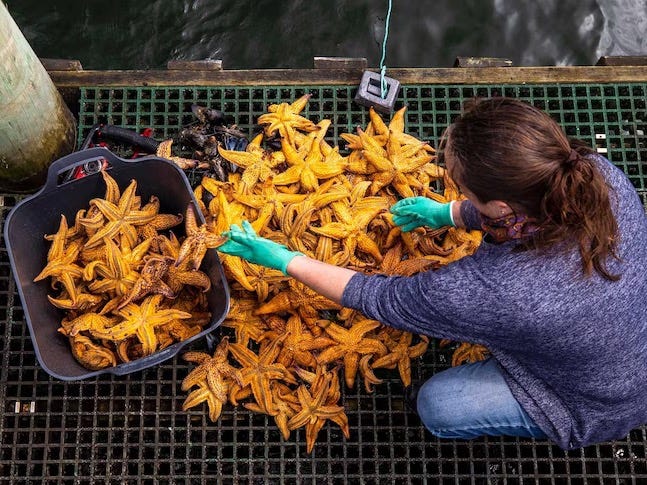
Once this bucket is full, I’ll take these Northern Pacific Seastars home.
** first and important disposal step - a big slosh of vinegar into the bucket, while they’re still alive. This sends the seastars into self-destruct mode, and also neutralizes the toxins in them. Hooray.
Then I wrap them in a plastic bag, and stick them in the freezer. They can lay up to 25 million eggs a season, so it feels important to make sure they are definitely no longer alive before I do anything with them.
Once they are a large, lumpy, seastar ice cube, it’s time for them to re-enter the local carbon cycle and the food web, in a less problematic form. Blessings on you, North Pacific Seastars - you are amazing organisms, but not helpful in your current form, to this land, to this place.
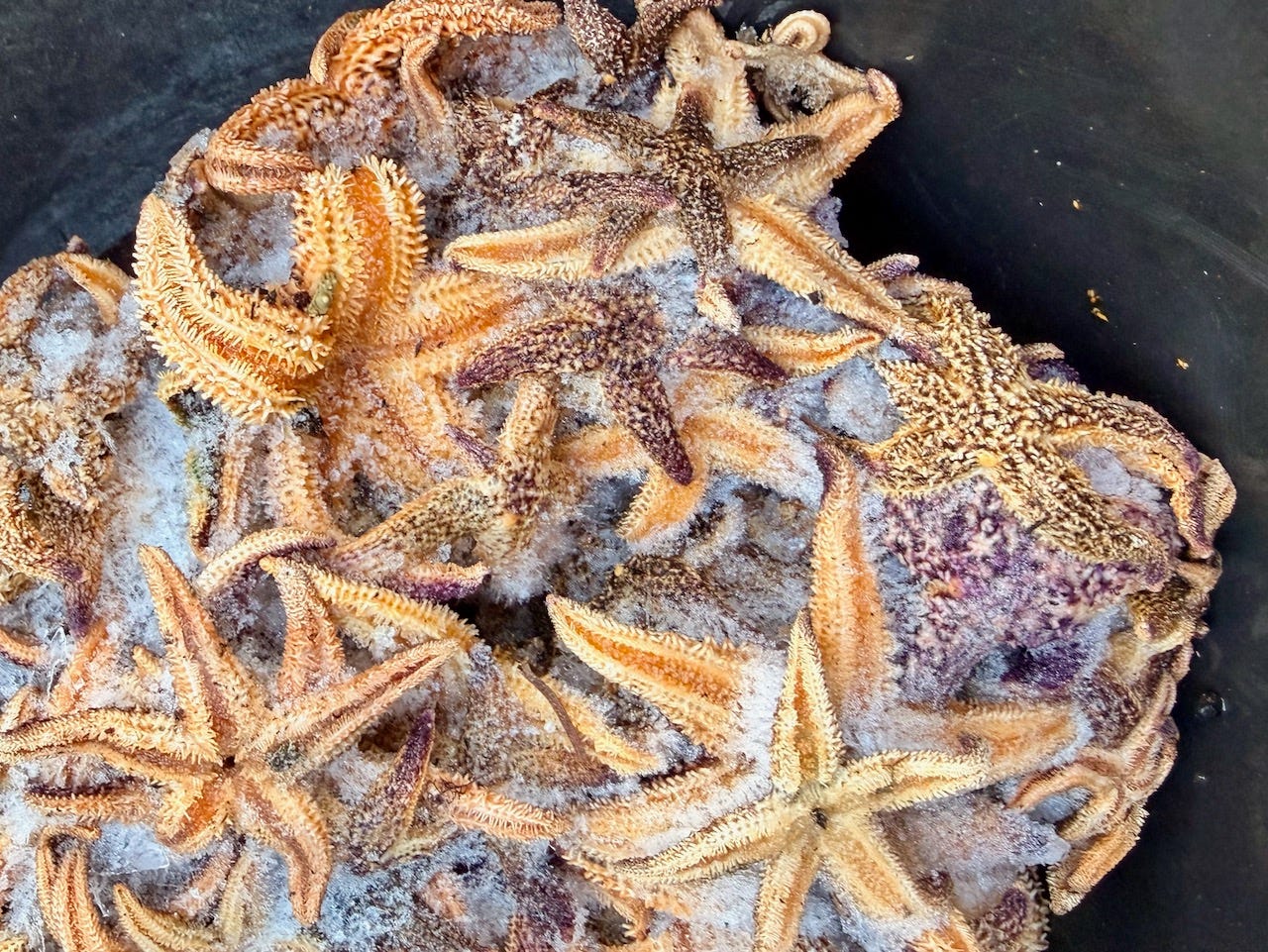
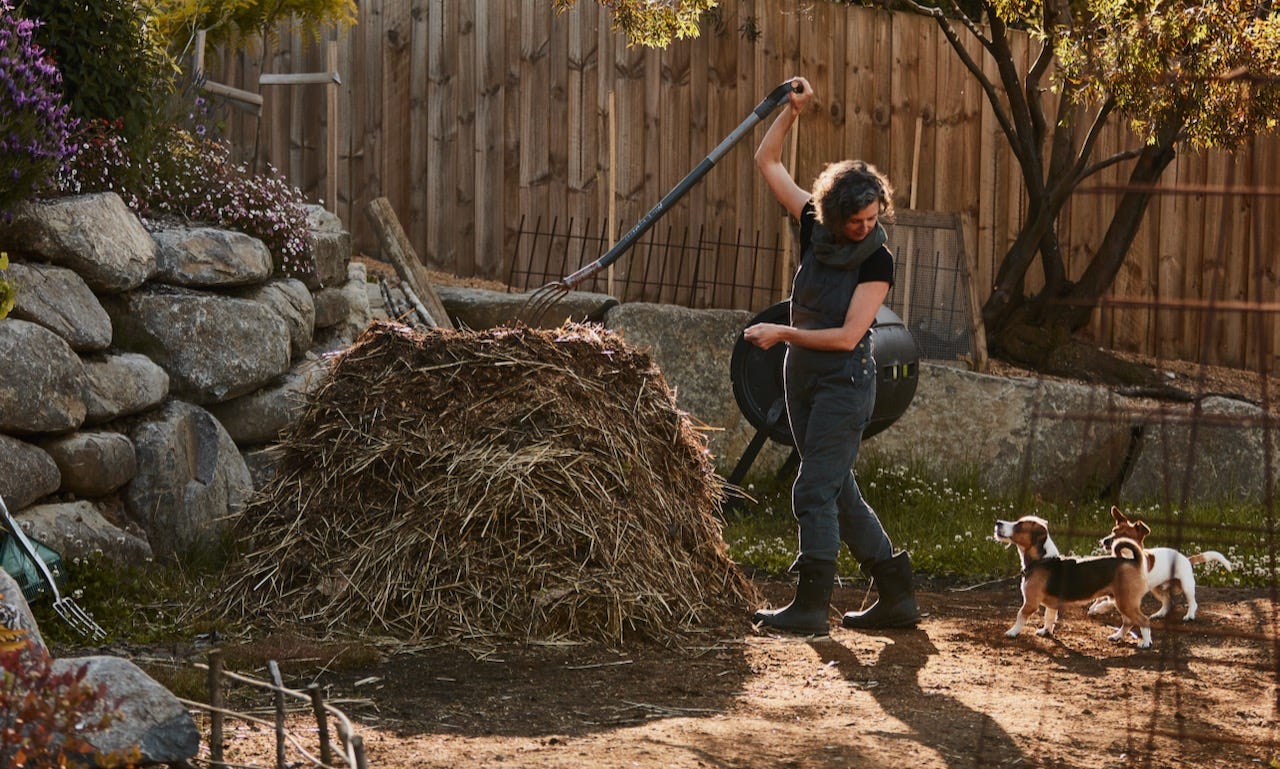
In my backyard, this re-entering means sending the seastars back through the web of life… via the compost. The chickens don’t really eat them, but they will scratch them about - and the seastars will soon break down and become incorporated into the rotational chicken compost system I have going on.
By this time next year, those invasive seastars will become sprouting broccoli… via their transformation into sweet, sweet compost - and my wheelbarrow, which takes the completed chicken yard compost back up to the veggie beds, for each season’s planting.
From there, the seastars will become me, and my family, and my friends. And then cycle back through other beings. In the way of such things.


Another way of taking it all back upstream….
Not literally - I’m not plunking this Seastar ice cube in a creek anywheres. I mean upstream in terms of watershed.
Upstream… like up into the landscape. Upstream like the salmon who swim far up the rivers of Turtle Island from the sea, who then get caught and dragged into the forest by bears, and in doing so replenish the high forest soils with nutrient-dense material.
Nutrients that will now cycle slowly back down through the watershed, back through the land, the forest, and through all the life in that forest. Nutrient that will, in time, trickle back down to the bottom of the watershed - through the bodies of many beings - down to the river, or the sea.
And then, ideally, through the bodies of different beings… repeat that same cycle of life. It’s the Carbon Cycle - remember? I’m sure you saw the diagrams in year 8 biology, same as I did.
A watershed, apart from being a great word, describes your local rainwater catchment.
Watersheds define community boundaries. Those who share water and nutrient flows share each other. And are bound accordingly, in fundamental ways. Common health, common drought, common wealth.
It may not seem like it these days, but we are very much entangled with the life in our watershed. It’s a human thing. And a water thing. And a carbon thing.
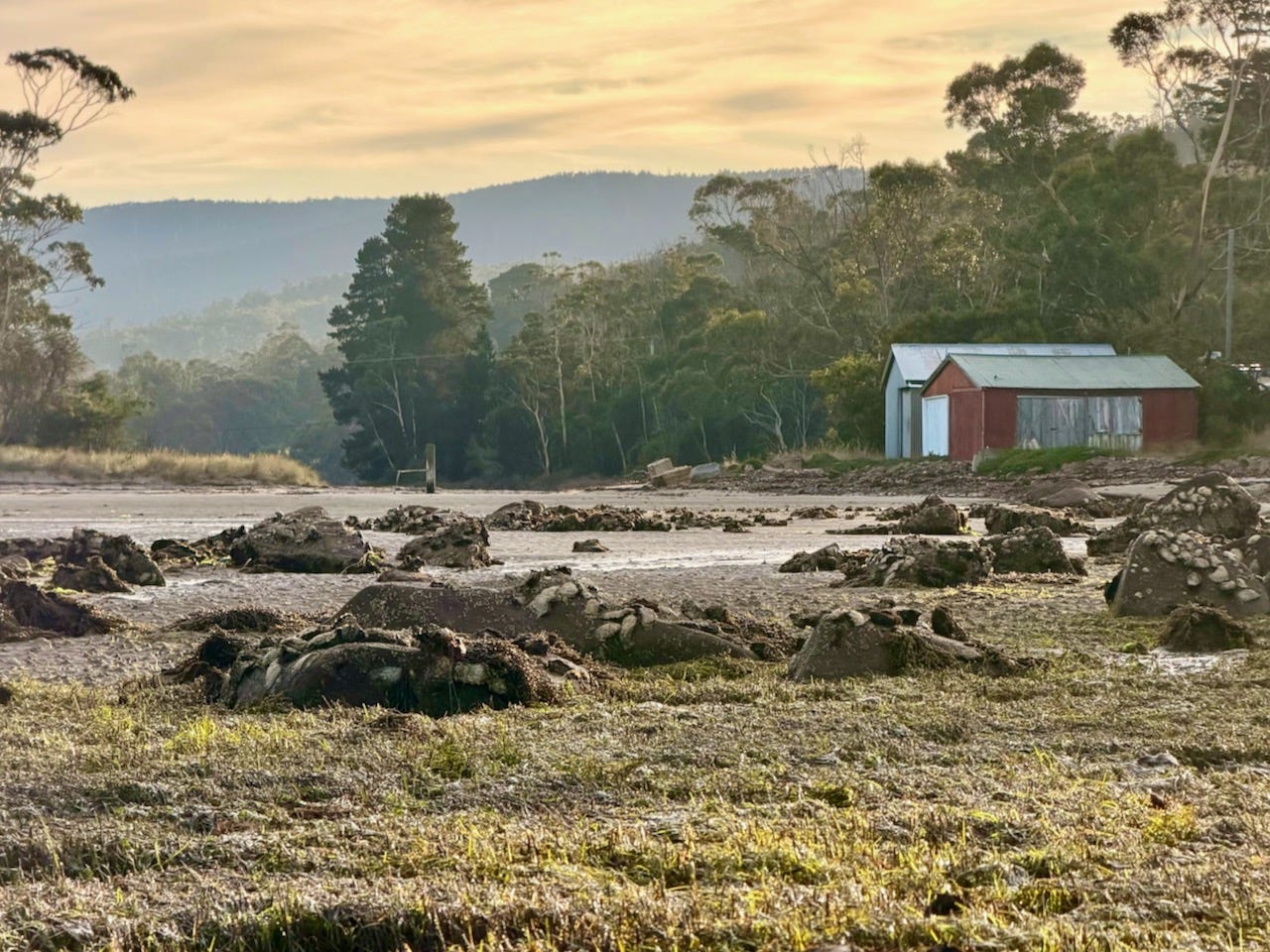
I do not like collecting and freezing the Northern Pacific Seastars, just to be clear. It’s not a fun job.
But it is one way I can practice active repair and give back to this sea country, just a tiny bit, by removing a little of the imbalance, and taking it back upstream. To slowly transform into other life. As with many things, compost is nearly always the answer (no matter what the question).
As this ecosystem shrugs and shifts, and the growing imbalances are un-ignorable - this is not just a quirky composting technique. It is also an act of respect, for this place that I love. And hopefully, a small act of renewal.
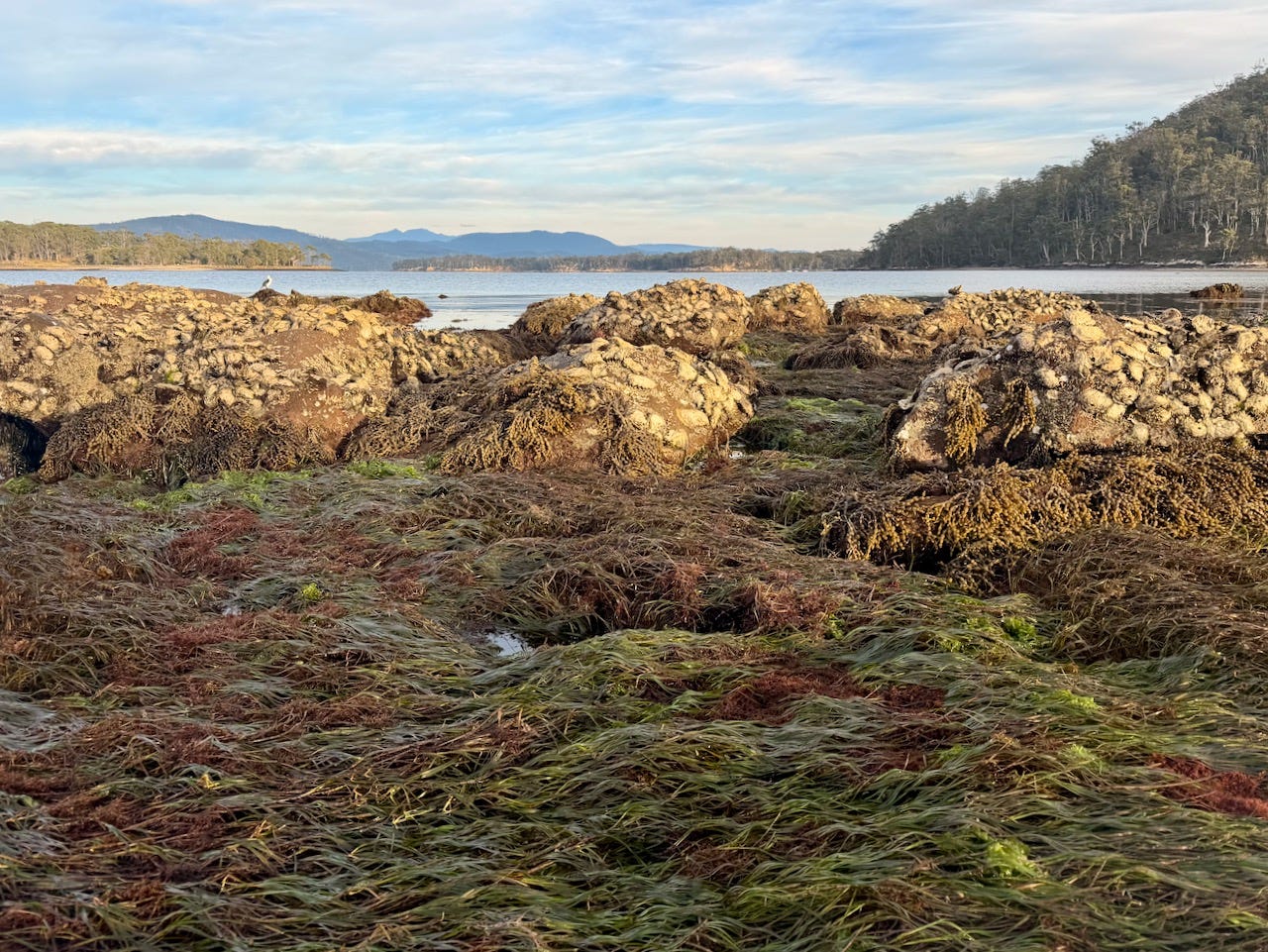
Sending the energy back through the ecosystem. As a quiet practice in these times - a way to witness, and be with what is.
I hate that these invasive seastars are choking this ecosystem, and how they are red flags for the acidification of these beautiful waters.
Practicing active repair in a way that supports life… both by removing these invasives from the ecosystem, and by composting them back into that same ecosystem, upstream… seems like the most sensible reverence I can make.
Which makes me think of composting grief as a practice, in these times, and how taking it all back upstream gives the land the opportunity to do what it does best.
Taking it all back upstream gives this land and ecosystem a chance to hold it all, slowly de-compose, filter, and process - the grief, the uncertainty, and the invasive seastars.
Transformation is an inevitable outcome.
The best bit is that anyone who feels moved to, can sign up for this kind of meaning-making… in whatever way this looks like for you - living in your particular body, in your ecosystem.
Witnessing what is, holding the pure hell of what that signifies - and then, still engaging - as best we can - in active repair.
Reverence as compost. Reverence as sprouting broccoli. Prayer, in a bucket.
I wonder when the next low-low tide is.

You can support my work by becoming a paid subscriber, by sharing this journal with friends, or buying one of my books. Thanks for reading, and be well - K
Vinegar: A secret weapon in the fight against invasive starfish - article on Crown of Thors starfish, but this technique is being used for Northern Pacific Seastars also
Watersheds - an introduction with Andrew Millison
What is the Soil Food Web? - Dr. Elaine Ingham on Soil + Carbon Cycles
Northern Pacific sea-star (Asterias amurensis)
Make Me Good Soil: Poems of Interbeing - upcoming from Sophie Strand
Please refer all Seastar Christmas Decoration enquiries to Lady Jo & Co
As a resident of the Pacific Seastars home environment and a lifelong composter/gardener, I appreciate your words regarding tackling the challenge of displacement. Living upstream 🌺
thankyou for, with such gentleness, re-storying something that can easily be reduced to good/bad, or pushing back against the tide, into a far kinder conversation of you don't belong here (in your present form), now let's see where your contribution can be truly helpful. it's undoing a habitual response and giving pause for more creativity.