
Timewater
On tidal lore, the intertidal commons, and the oldest clock in the world

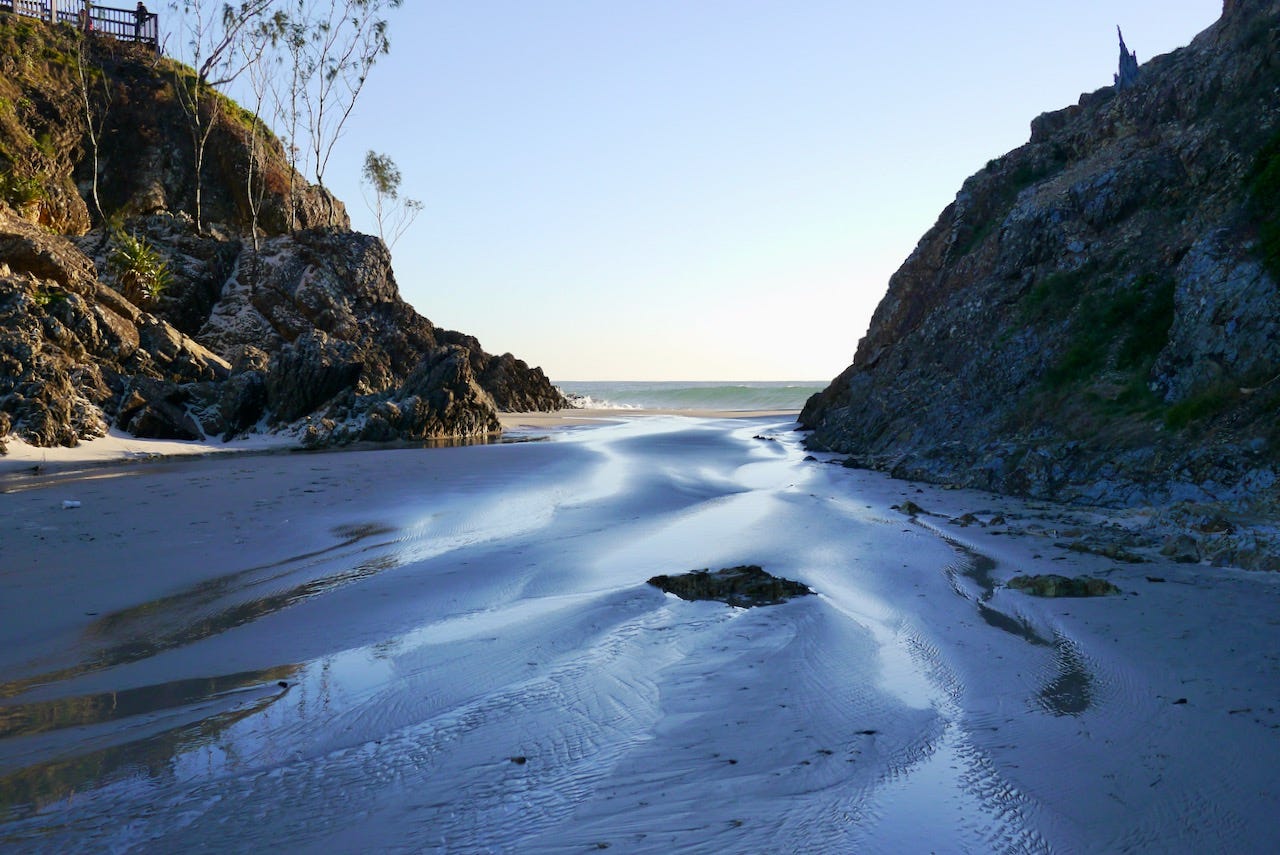
The tide went out while I was sleeping, and this morning, the land in front of me is new. Tidemade.
Not new the way a swept floor is new - new the way only intertidal places can be. What was written here yesterday - in footprints, dog trails, a sandcastle or two, the long drag-marks of a kayak - is no more, may never have been.
The tide came in, and covered all. Cleansed all. And then, slowly retreated. This low tide shoreland has been returned to itself, new and clean and briefly, gloriously, patterned with only birds feet, and soldier crabs skittling.
Here on the southern edge of lutruwita, our tidal range is gentle. A metre, maybe two on a big spring tide, when all possible tidal forces converge.
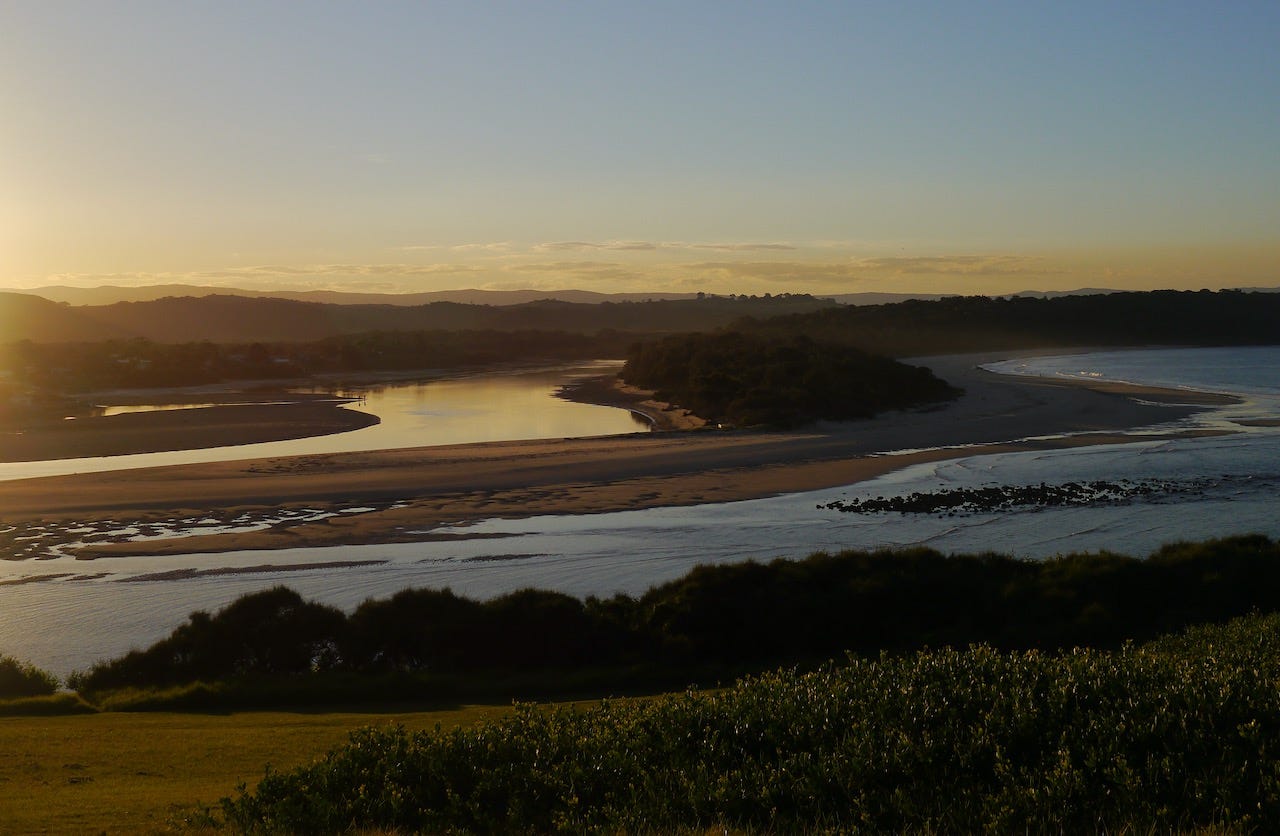
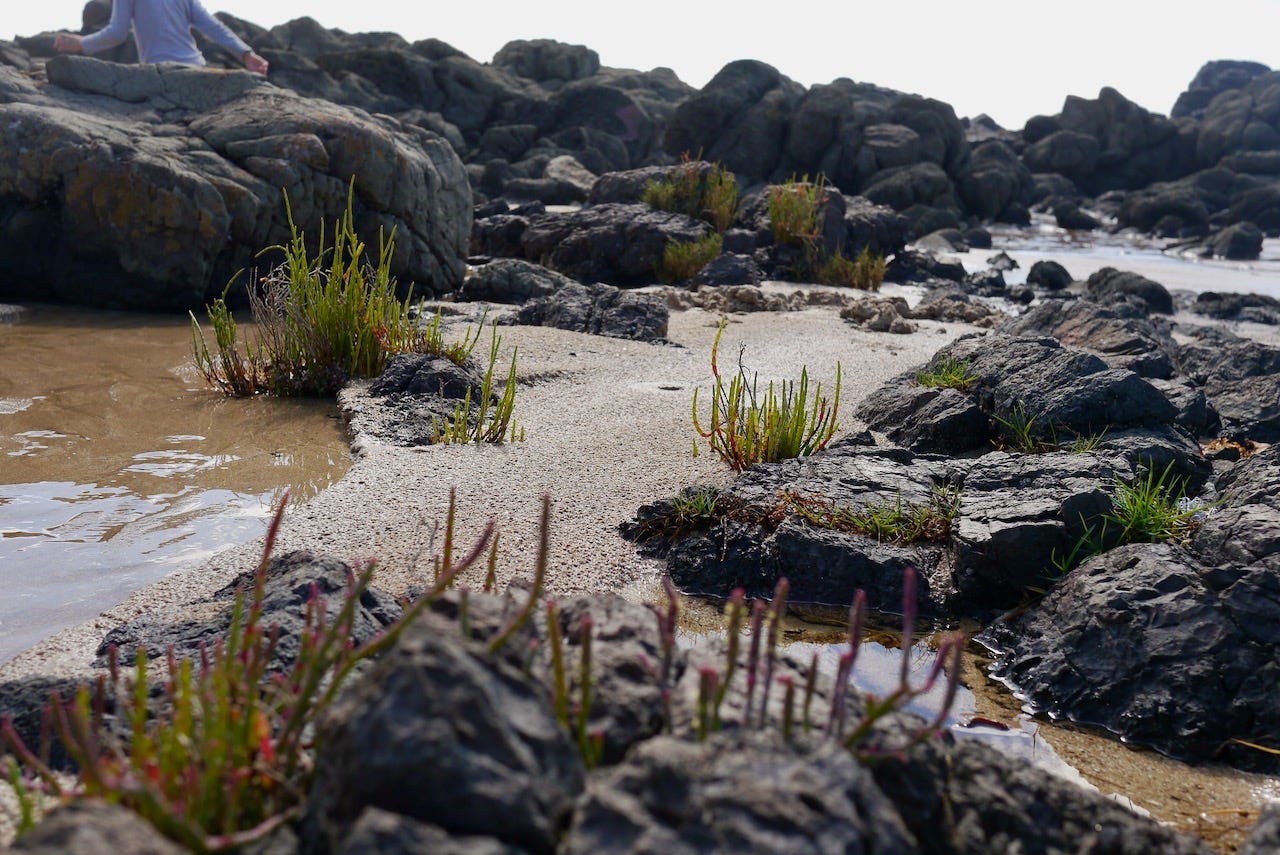
The reveal is modest: a widening of the beach, a fringe of exposed rock, the soft estuary flats revealing secret crusts of oysters and bits of old boats. It is a familiar daily breath, but compared to some places on Earth, a small one.
In some places on Earth right now, I know the tide is going out for miles - a new country appearing, horizon to horizon, to be crossed quickly before the sea returns. Different scales, same space: the tidal zone, appearing.
This sometimes-country - the intertidal, between the high-tide mark and the low - belongs to two worlds and fully to neither. Twice a day it is ocean floor. Twice a day it is land. And in most places, in most legal systems, in every tradition I’ve come across: it belongs to everyone. Or, it should.
Timewater
The Norse word for tide is tidevann. Timewater. I love this word because it names what the tide actually is: not just water, but time made visible - time you can stand in, time that tells you what to do next.
In Anglo-Saxon, tīd meant time before it ever meant tide. The same word held both. Which makes sense, when you think about it: for anyone living in tidal communities, tidal time was time. And some places, still is time. Not metaphor, nor poetic phrase - but the main, actual, practical, organising rhythm of the day.
Then there’s Flood, and Ebb. The Flood tide is the incoming. Also called the Flux tide. At this point, the tide is ‘Making’. The Lively Waters.
The Last of The Tide is just before High Tide, when ships might still embark. Until it is Still-Stood. The Top of the Tide. Full Sea. The High Water.
And then the Tide Turns. The Ebb tide is the outgoing. The Going tide. The Slack Water follows, at Dead-low. The Dead Waters. When the Tidemade is revealed - objects and landscapes only glimpsed - until the Flux begins, and the tide is Making once more.
In Palawa Kani - the language of the Palawa people of lutruwita - I’ve read that full tide is Neanta Payawaree - woman tide - and low tide is Loo Payawaree - child tide. The full tide is the mother; the low tide, what she reveals. Tidal knowledge held not just in practice but in the structure of relationship itself.
Each of our tides are local in a way that the sun is not. The sun rises for everyone, everywhere - adjusted for longitude, but reliably universal. Your tide is yours - of your place on earth, specifically. Shaped by your local bays, your headlands, your continental shelf, the particular geometry of your coast. Tide is a place-based timewater - every day, and always.
Tidal knowledge is place-knowledge, in the deepest sense. Like cultural astronomy, it is bound up in observation, lived experience, and place. This kind of knowledge of the tides comes from attention, from return, from years of noticing. It lives in the bodies, maps and encoded narratives of people who pay deep attention to where they live.
Born on the incoming
Before Newton and his crew named gravity, and the invisible forces (Moon, Sun) who pull the oceans towards them, while the Earth spins beneath, the tides were already living knowledge. Felt in the body, built into the calendar, woven into language. Coastal peoples didn’t require a mechanical explanation to live in tide-time. Tides rose and fell. They shifted. You planned with them. You read them, moon by moon, season by season, place by place, until they were as familiar as the face of someone you loved.
And then, they did what we people do with the things that matter most: they watched carefully, and placed this tidal knowledge inside their hearts, stories and lives.
The tide has been recognized as a cosmic threshold, holding the lore of birth and death. In Wales and Portugal and Brittany, and along the Cantabrian coast - it is said that you are born when the tide comes in, and die when it goes out. James George Frazer recorded this knowledge woven through dozens of cultures when he was writing The Golden Bough. It kept appearing, held in different forms, arrived at from different directions.
I read of some peoples who buried their dead on the flood tide, never the ebb - lest the retreating water carry the soul somewhere too far to return from.
This shows up in stories, too. Barkis, the old sea captain in David Copperfield, lies dying in his house, and Mr Peggotty explains: “It’s ebb at half-arter three, slack water half an hour. If he lives till it turns, he’ll hold his own till past the flood, and go out with the next tide.”
And in Breton local knowledge - butter made at the tidal turn would be good, clover sown at the flood would grow, milk foaming in the churn would keep foaming until high water was past. The hen eggs: best set under a brooding hen on the incoming tide if you wanted hens, the outgoing if you wanted roosters. The tide reaches all the way into the farmyard, the dairy, into household chores, and daily matters.
Folklore, yes. But also… examples of this same deep recognition that the tide marks transitions, thresholds, passages between states.
Slack water as the pause between worlds. Between ebb and flood. The moment the sea holds its breath before turning. This was the threshold: the pause between, the held breath of the world. Even Bram Stoker noted this - Dracula could only cross running water at slack or flood. Even Vampires respect the timewater.
I love these accounts - as records of people paying close attention to the most reliable daily rhythm in their world, and finding it everywhere they looked. Of course the tide showed up in birth and death and butter and eggs. It was the rhythm that ran beneath everything else.
Living in tidal time
The tide ran beneath entire working lives, too - and in some places, still does.
Take the King’s Guide to the Sands - a royally appointed position (still!) that I just learned of, in Britain. The first Guide was appointed in 1548, by the Duchy of Lancaster, to lead people safely across the highest path through the wet sands of Morecambe Bay at low tide - a massive shortcut that bypassed a swamp and a river. Given that it was a sand path across tidal flats, only sometimes accessible, and prone to shifting about, it was also “the most dangerous highway in Britain”.
There’s the alternative route of a train now (and a road or two, I’m sure) however the position of Guide to the Sands has never lapsed. Michael Wilson, a local fisherman, holds it now.
Then there is the wonder of the Brobs - which the King’s Guide to the Sands maintains to mark the crossing: laurel branches pushed into the sand at intervals, showing where the highest sand path lies at low tide - the same road that will be many metres underwater in a few hours.
Laurel branches, as an aside, are used as Brobs because they hold their leaves over many days, even when submerged in the tide. Cheerful little green tops telling you where to go, and how not to drown on your journey across the bay.
The Brobs are moved as needed - there’s been times when the main course of the river has shifted six miles from its previous course overnight, after heavy rain, and so the highest sand path across the bay at low tide changes also. Tidal knowledge is never finished. The crossing you walked last week may not be the crossing you walk next week. The Guide to the Sands knows this. Best follow him. And the Brobs.
Saltwater drovers work in a similar register. Cattle are still mustered and moved with the tides between the lutruwita / Tasmanian mainland and Robbins Island - the tide as gate, opening and closing on its own schedule, and the drovers planning their movements around it as a matter of course. In Scotland, at Kylerhea on Skye, drovers once swam cattle through the shallowest crossing at slack water, from island to market - nose to tail, with the window of safe passage measured in minutes.
In all of these life ways, the tide is the organising principle. Communities didn’t work around the tides; they worked with them. The tide told you when to plant, when to trade, when to cross, when to pray. It was the clock that actually ran the day.
The Ungovernable Commons
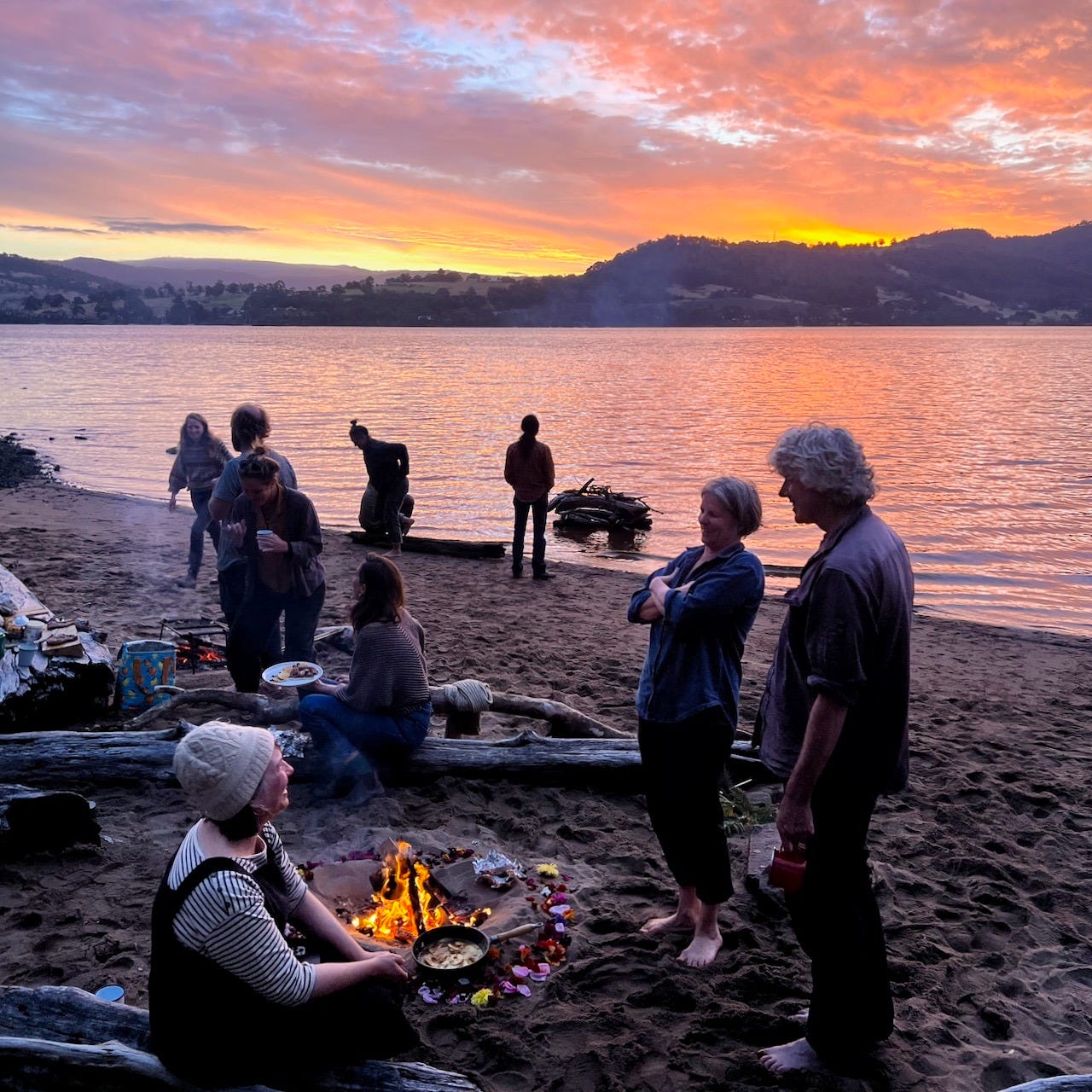
The wrack line is the high-tide mark: a dark ribbon of kelp, shell grit, and sea-delivered things left at the top of the beach by the last high water. In many places, this is where private property ends, and the commons begin.
In Australia, law runs to the high-tide mark and then stops. Everything below that is public space. So… low tides are for exploring - for making your way around to that secret beach that you can’t access by land, or simply inhabiting the intertidal commons - a rare remnant of ungovernable space, in this world.
But still so liminal: the tide resets this commons multiple times a day. You cannot fence it, build on it, or easily permanently mark it. Any structure you place there will be underwater before nightfall. This is a commons not by decree, but by physical reality - which the tide will enforce, protect, reveal, and then reset, in it’s own rhythm.
I also love that the legal definition of what counts as intertidal is itself lunar. In Australia, the High Tide Mark is measured by the lunar month. In America, the high tide mark is measured by a 19-year cycle called the National Tidal Datum Epoch - the same Lunistice cycle that drives the slow swing of the moon’s highest rise and lowest dip on your horizon.
These commons is literally measured and defined by the moon.
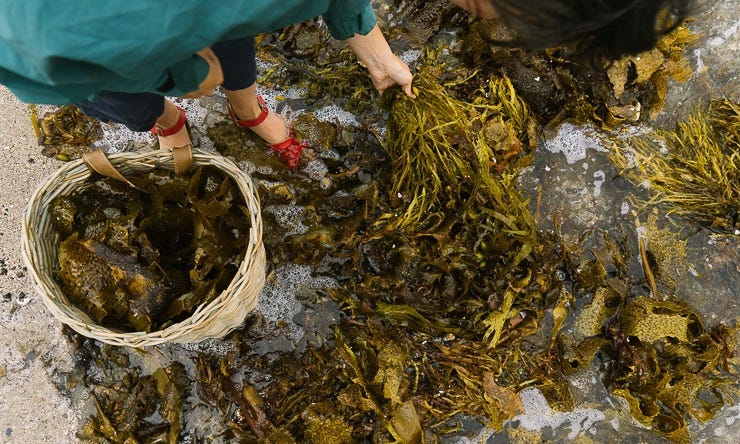
People have always made the most of these commons - for gathering food and materials, and also for holding space.
In 1843 - during the Great Disruption - a ‘Free Scotland’ congregation in Strontian found itself without a church, and living under a hostile landowner.
So they held their church services in the low tide lands, on the foreshore below the high-tide mark: on land the laird didn’t own, couldn’t own, and couldn’t stop them using. The commons of the tide made them free.
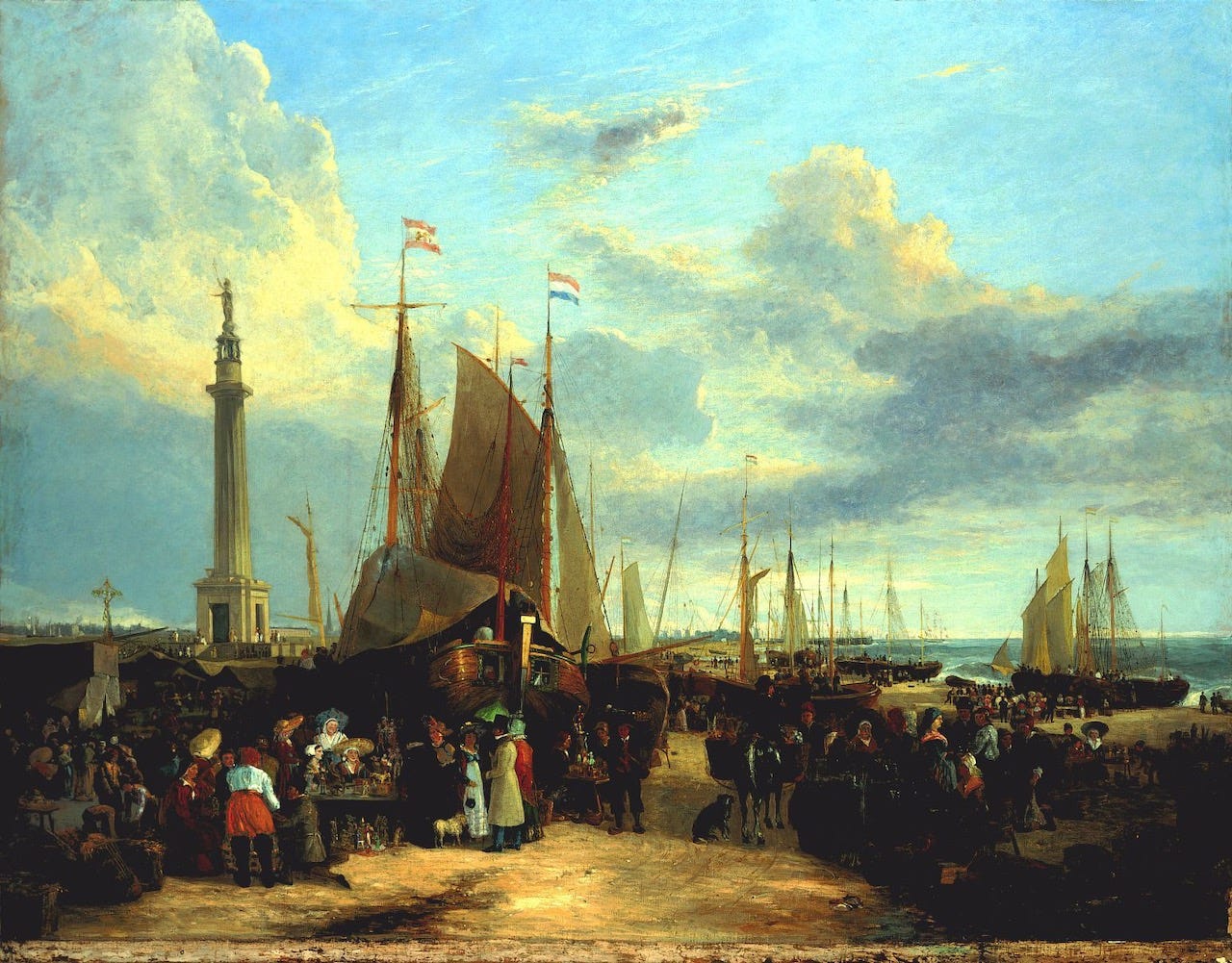
And once apon a time at Great Yarmouth, in England, Dutch merchants used to run a VERY pop-up market called the Dutch Fair on the main beach… which was only revealed at low tide.
Twenty or thirty flat-bottomed boats would beach themselves at high tide; the water would go down, and the merchants would unload on the sand and start selling - herring, Dutch pipes, dried flounders, wooden shoes, apples, and gingerbread. A very quick festival, which brought folk from near and far - until the incoming tide called an end to the market, flooded all traces of both herring and gingerbread, and re-floated the boats who were all well away before the next high water arrived.
No lease, no landlord, no permission required. The commons as a point in time, and an event, as much as a place.
As you might guess, this world being the way it is, the intertidal commons remains a contested space in many places.
On the Isle of Skye, a project called Building the Intertidal Commons has spent the last several years working to enshrine collective usership rights over the Scottish foreshore in law - to make explicit what the tide has always implied.
The goal of the project is that all economic activity on the foreshore must be “ecologically regenerative and socially reparative.” Not just accessible. Held to account - for the sake of both the community, and the more-than-human world.
This matters because the pressure on intertidal zones is ever-growing. Industrial aquaculture, coastal development, sea level rise - as the sea rises, the intertidal shifts, and these commons will shift with it. Whether these spaces remain a commons depends on decisions being made now, in rooms that mostly don’t smell of the sea.

The tide is coming back in. I can see it from here - the flats beginning to flood, the water creeping its way across the sand, the wrack line soon to be lifted and rearranged.
The low tideland is lost, and it is also not. The same rhythms that uncovered this shore this morning will return it tomorrow. The timewater continues.
Paying attention is the invitation, if you want to fold this kind of knowing into your knowing of place.
Taking notes on how to become ungovernable, generous, and how to always show up once more - like the tidelands - is the offering.
Entangled Garden is a reader-powered publication written by me, a human. If this journal speaks to you, you are welcome to join the conversation:
You can support my work, or becoming a paid subscriber, by sharing this journal with friends, or buying one of my books. Thanks for reading, and be well - K
References
Tidal Cultures Website - what a generous trove! Owain Jones is a Good Egg.
Floating Church, Free Church: Naval Policies in the Long Reformation
Kelp, Clearances, Clanranald, Speculators and Scottish Scoundrel Lairds
What a stunning musing on time and tide. A beautifully researched piece and articulated argument that the sanctity of the latter should be held for all. Thank you.
Absolutely loved this, thank you. I've done a bit of reflecting on liminal space over recent years but as a mainly landlocked person, hadn't considered the tides. I'm in a liminal space between breast cancer diagnosis and chemo and this piece helps me understand the continuity of life through this process. Beautifully written and powerful insights, thank you.